
Liminal: The Particular
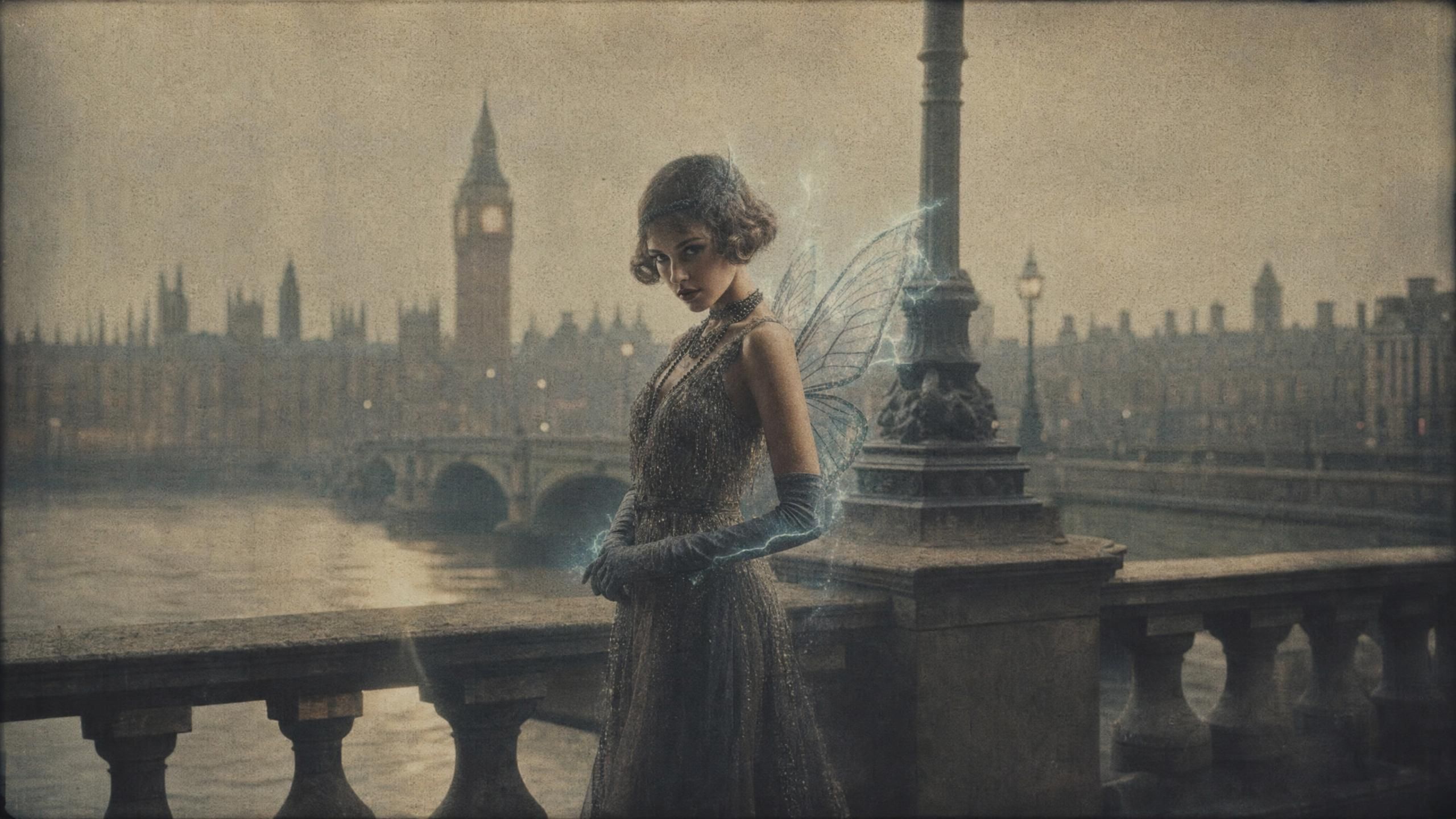 "They tell us it is over. They put up a stone in Whitehall and they told us to be quiet for two minutes and then to get on with it. But nobody told the dead, and nobody told the coal, and nobody told the things under the bridges. Over? Nothing is over. It has only got quieter."
— Ada Fenn, medium, Bermondsey
In London in the 1920s, not all is what it seems. Behind the facade of peace and prosperity, beyond the afterglow of victory in the Great War, and beneath the glitter of the Empire, something is stirring — something more than the spirit of men yearning for something greater than themselves. It is unseen, hidden in the shadows, beyond the sight of men: a darkness spurred on by the winds of change and the unease within men's souls.
It is November 1926, and the year is ending badly. The General Strike broke in May, but the miners' lockout grinds on into the winter — the pits are silent, the grates of the East End are empty, and coal is worth more than gin. Three-quarters of a million British dead lie in France, and a bereaved nation has taken up talking to them: the séance parlours are full, the mediums have waiting lists, and some of them — enough of them — are not frauds. When the fog comes up off the river, thick and yellow-black, Londoners call it the Particular, and there are streets where the old people will tell you, seriously, that the Particular does not merely hide things. It carries them.
Beneath all of it lies the Hidden World, and it is older than the Empire. Vampires stand behind quiet men in Whitehall. The Fae hold four hundred years of contracts and two courts in the parks. Werewolf gangs, forged in the tunnels under Flanders, run the docks. Magicians feud in their fractured temples, the dead drift up from the river stairs, and things that have no faction at all keep shops, keep clubs, and keep accounts. For centuries these powers have managed their affairs by custom, grudge, and murder — but this winter, something unprecedented is being attempted: a formal peace among the powers of the Hidden World, a treaty to bind them all. They are calling it the Pax Londinium, and everyone who is offered a chair at that table — and everyone who is not — understands that whatever is written this winter will govern the shadows for a century.
And the clock is running, because the modern world is coming for the old one. The Electricity Supply Act is before Parliament; the National Grid it births will lay current to every town in Britain, iron flat the folded places, and re-cut the ancient lines of power beneath London like arterial roads through a churchyard. The Hidden World has perhaps one winter to put its house in order before the lights come on everywhere, forever.
You are a Liminal — one of the people between. You have a foot in the mundane world and a foot in the Hidden one: touched by the war or by blood, by bargain or by accident, you can see what most souls are mercifully spared. A light will be cast into the darkness. What lurks beyond the shadows will drive some to madness; for others, their souls shall be awakened — and a handful, the ones standing in the doorway between the worlds, may be the only people in London who can carry messages both directions, settle what the great powers cannot, and decide who gets a seat at the table before somebody takes the table away.
Something goes bump in the night. This winter, it is asking to negotiate.
For full core rules, go here: Liminal by Paul Michener (published by Modiphius). (Talk to me about other options, if necessary)
For setting and background details, check this Liminal The Particular page.
For setting-specific rules and background info, check this Liminal: The Particular Supplemental Rules page.
Where Everyone Is Standing
The war ended eight years ago. Roughly three quarters of a million British men did not come home, and something close to two million came home damaged. Nearly every family in the country has a gap in it. The Cenotaph has stood in Whitehall for six years, the Unknown Warrior lies in the Abbey, and every 11th of November the whole country stops dead for two minutes. In a world where the dead demonstrably persist, that is not a metaphor. It is an event.
The General Strike came and went in May, nine days of it, and it broke. The miners stayed out. They are still out as the campaign opens, into their seventh month, and in the third week of November the Miners' Federation will finally advise the districts to settle on the owners' terms. Men are going back beaten, to longer hours and less money, in a winter that has already started biting. There is no coal in the grates of the poor. There will be reprisals in law next year.
Parliament is finishing an Electricity (Supply) Bill that will create a Central Electricity Board and build a national grid — a lattice of steel towers and copper strung the length of Britain, over every ley, through every parish, across every boundary that has held since before the Romans. Nobody in Westminster has the least idea what they are proposing to do.
The Imperial Conference has just concluded in London, and the Dominions have been declared equal in status to the mother country. Delegations from Canada, Australia, South Africa, Ireland and India are in the hotels of Bloomsbury and Mayfair, and some of them have brought magicians, and some of those magicians have brought lists of things they would like returned.
Tutankhamun's tomb is four years open and the newspapers have not stopped talking about curses. The wireless has been in ordinary homes for three years; two million licences and rising, all of it coming out of Savoy Hill as 2LO. In September the tube crossed the river properly for the first time and ran all the way to Morden, under the Thames, under everything.
It is going to be a cold winter and there is no coal.
The Five Themes of 1926
1. The dead are recent and numerous. Spiritualism is not a fringe interest, it is a mass movement with churches, newspapers, and a membership in the hundreds of thousands, most of them bereaved. In Liminal's world, most of them are right. This is the boom era of necromancy and it is happening in front rooms in Willesden.
2. Class is a physical law. Accent, cut of coat, hands, teeth, school. A gentleman may go where a costermonger may not, and the reverse is also true, and both facts are usable. Servants are everywhere and hear everything.
3. The machine age is arriving on top of an older Britain. Motor buses and horse drays share the Strand. The grid is coming. Wireless is here. Cinema is here. The Hidden World is largely unprepared and does not agree about whether this is a threat.
4. The Empire is in London. Seamen from Bengal, Aden, Somaliland, Yemen, the Caribbean and Canton in Poplar and Limehouse and Cardiff. Students from West Africa and India in Bloomsbury. Delegates from the Dominions in Whitehall. They have their own dead, their own spirits, their own scholars, and no reason at all to defer to the Council of Merlin.
5. Nothing is settled. Modern Liminal has a Pax Londinium, a P Division, a purged Metropolitan Police. In 1926 the peace has not been made, the police have not been cleaned out, and the arrangement you took for granted in the twenty-first century may be the thing the characters start to build — or fail to build — this winter.
Want to see more? Sign up or log in to read the full game, post, and play — you'll land right back here.