
What was Left Behind
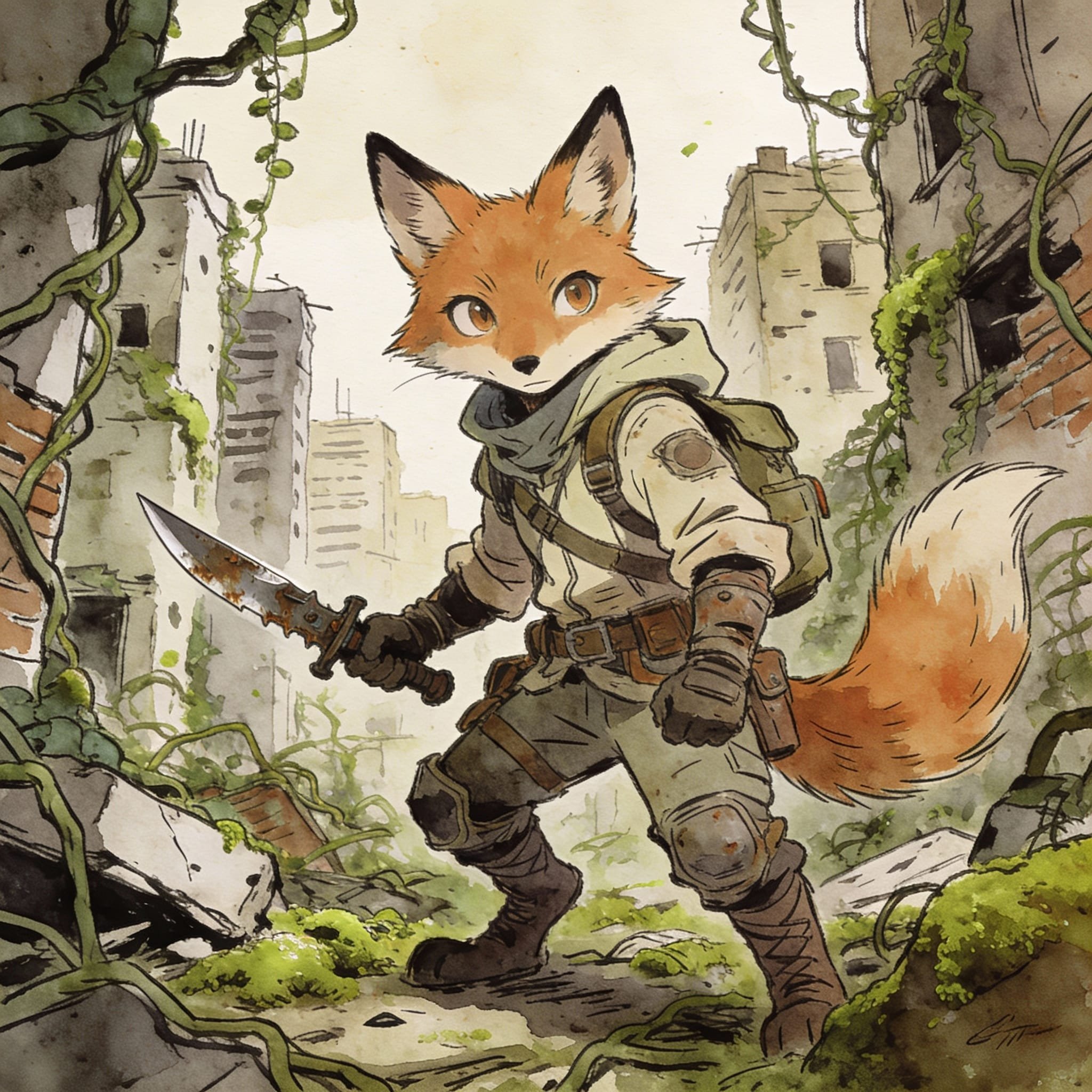
What Was Left Behind
A D&D 5e Campaign
They say the Hoomans built towers that scraped the sky.
They say they caged lightning, split the atom, bent rivers to their will, and spoke to machines that answered back. They mapped the stars and named the world as though it belonged to them.
And then they vanished.
No one alive remembers how. No one agrees why.
What remains are their bones of stone and steel, swallowed by forests older than memory. Highways now serve as migration trails. Broken cities bloom with ivy and moss. Flooded capitals whisper beneath the sea. Somewhere beneath the earth, machines still hum in the dark, waiting for instructions that will never come.
The world did not end. it changed.
Animals walk upright now. They build villages in the shadows of fallen skyscrapers. They tell stories about the Hoomans the way we tell stories about dragons; half myth, half warning. Magic, once suppressed or misunderstood, breathes freely again. Philosophies clash. Oaths are sworn. Ancient scars still glow in distant wastelands where the disaster burned too brightly.
This is not a world of ash and despair.
This is a world that outlived its apocalypse.
In What Was Left Behind, you play a child of the Reclaimed World: a sentient animal shaped by evolution and adaptation, a mutated being born of arcane fallout, or an ancient artificial intelligence struggling to define itself beyond obsolete directives. You are not a desperate scavenger scraping for survival. You are an explorer, a guardian, a philosopher, a wanderer, or maybe someone deciding what comes next in a world that has already endured its worst mistake.
The tone is closer to Final Fantasy or Eberron than Mad Max or Dark Sun. There are ruins, dangers, and mysteries, but there is also beauty, humor, culture, and hope. The apocalypse is ancient history, not an ongoing catastrophe. Civilizations exist. Trade happens. Beliefs matter. The future is not doomed...it is unwritten.
Character creation is built around flexibility and expression. Rather than dozens of hyper-specific species, you choose a broad animal lineage, Canid, Ursine, Avian, Rodent, Pantherine, Insect, AI, and more. Then define your character with a single 1st-level specialization feat that represents how your species adapted: flight, echolocation, desert endurance, builder’s instinct, electrokinetic charge, mutation, and so on. The goal is simple: if you can imagine the creature, the system can support it, without bloated mechanics or optimization traps.
As a sandbox game, there is no required party composition. No mandatory healer. No “right” build. The world responds to who you choose to be. Encounters are shaped around the characters that exist, not a checklist of roles. Bring a concept you care about, not one you think the party needs.
Magic in this world is real and primal. Clerics draw power from philosophies, not gods. Paladins wield conviction as a weapon. Druids speak for a world that remembers. Artificers blend true magic with the relics of a fallen age. Warlocks bargain with the echoes of catastrophe itself. The central question is not how to survive, but what kind of future should grow from what was left behind.
The forests are deep. The seas are wide. The ruins still hum in forgotten places.
Somewhere out there is a story only your character can tell.
The world is ready.
Want to see more? Sign up or log in to read the full game, post, and play — you'll land right back here.